
BEST STUDIO
MONITORS
FOR MUSICIANS
IN 2026
Studio monitors are supposed to tell you the truth. Whether you’re mixing a song, building a bedroom studio or producing music at a desk, the right speakers help you hear what is actually happening instead of simply making everything sound impressive.
Affiliate disclosure: We may earn a commission from qualifying purchases through retailer links, including Reverb, at no additional cost to you.
WHICH MONITORS SHOULD YOU BUY?
KRK Rokit 5 G5
Three voicing modes and extensive room-tuning options make this one of the most flexible compact monitors here.
Yamaha HS5
A straightforward nearfield monitor built around accurate, revealing playback rather than exaggerated sound.
ADAM Audio T5V
ADAM’s U-ART tweeter and HPS waveguide give the T5V a distinctive approach to detailed nearfield monitoring.
Kali Audio LP-UNF
A compact powered pair specifically designed for ultra-nearfield desktop monitoring in smaller rooms.
Bigger Is Not Automatically Better
Large speakers can create more low-frequency problems in a small untreated room. Match the monitor size to your listening distance and room before assuming you need the biggest woofer available.
YOUR ROOM IS PART OF THE SYSTEM
Studio monitors do not work independently of the room around them. Where they sit, how far they are from the wall, where you sit and what the room reflects can all affect what reaches your ears.
For many home studios, a pair of roughly five-inch nearfield monitors is a sensible place to begin.
The goal is not necessarily the speaker with the biggest bass. The goal is a monitoring setup that lets you make repeatable mix decisions that translate outside your room.
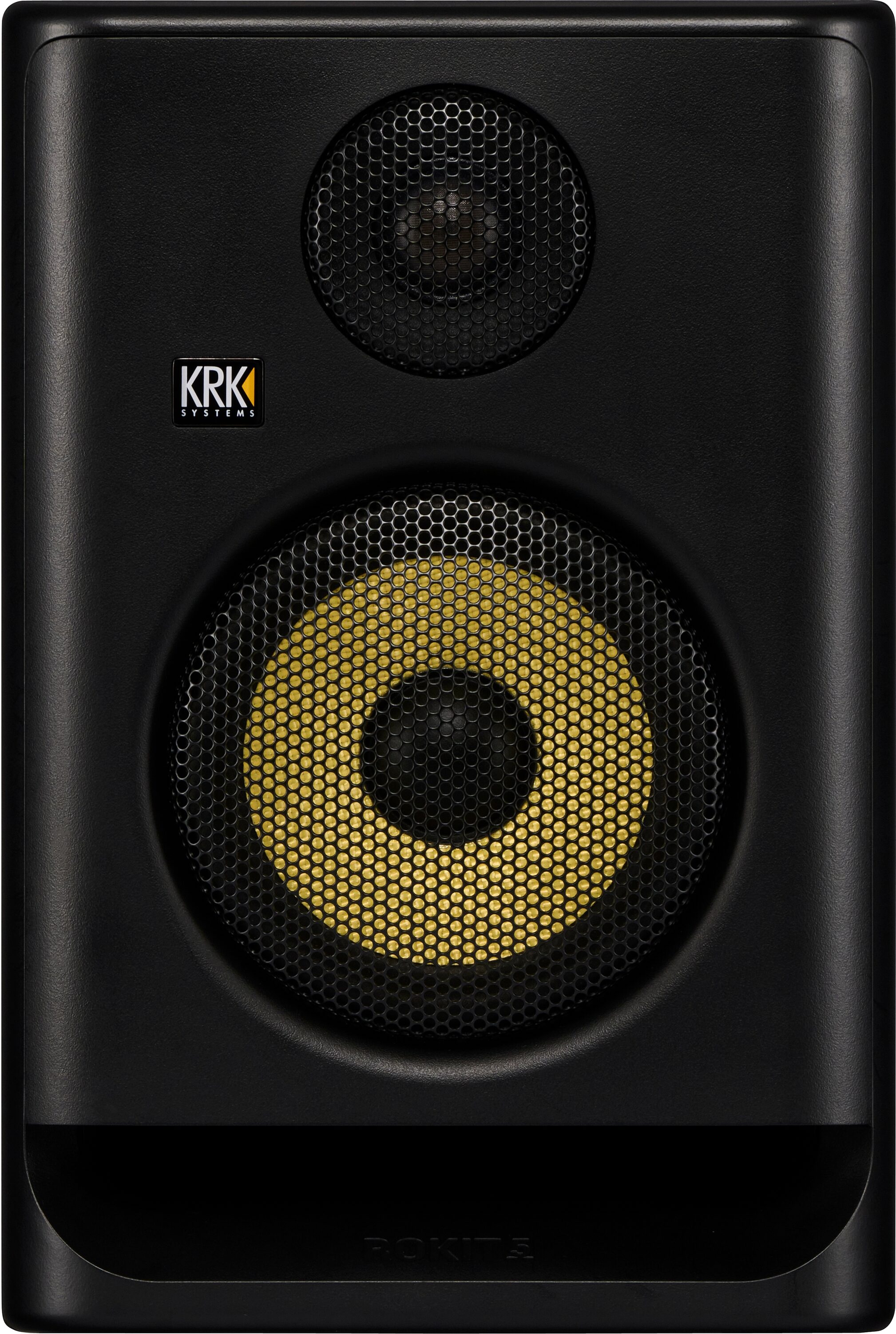
KRK Rokit 5 Generation 5
The fifth-generation Rokit 5 stands out because KRK built several different monitoring approaches into one compact speaker.
Mix Mode is intended for neutral critical monitoring, Focus Mode emphasizes the midrange for analysis, and Create Mode offers a different voicing for production and casual listening.
- 5-inch woven Kevlar aramid-fiber woofer
- 1-inch silk-dome tweeter
- Mix, Focus and Create voicing modes
- 25 boundary and tuning EQ combinations
- Front-ported enclosure
- Balanced XLR / TRS combo input
Best for: home studios, musicians, producers and creators who want substantial room-adjustment options and multiple reference voicings.
See listings on Reverb →
Check the exact model, condition, included accessories, shipping and seller return policy before buying. Listings and availability vary.
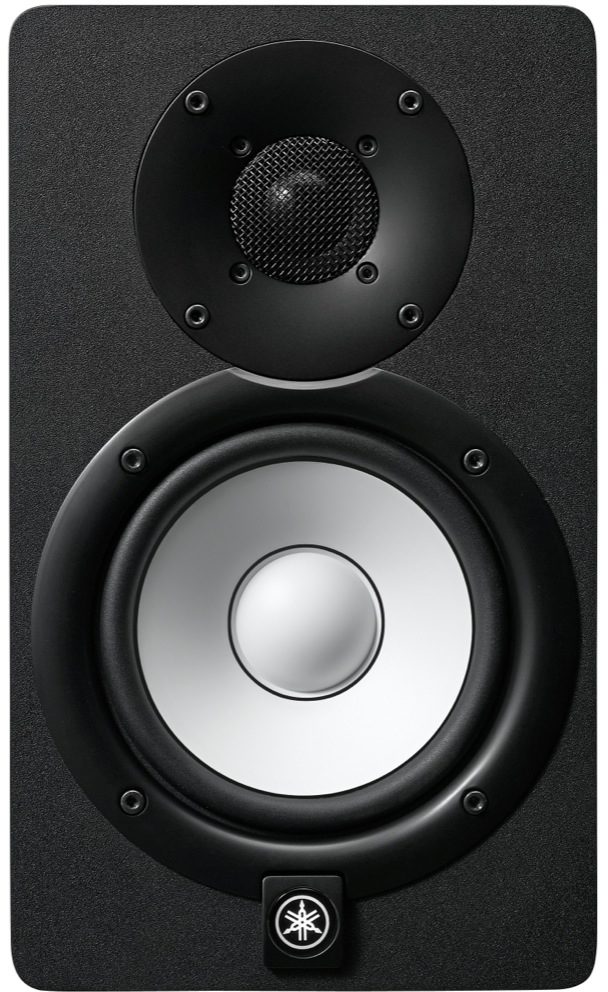
Yamaha HS5
Yamaha’s HS5 takes a traditional studio-reference approach: the purpose is not to hype the music but to help you hear problems clearly enough to fix them.
Its five-inch woofer and one-inch dome tweeter use separate amplification, while Room Control and High Trim switches help adapt the speaker to its placement.
- 5-inch woofer
- 1-inch dome tweeter
- 70 watts total bi-amplification
- 54 Hz to 30 kHz stated frequency response
- Room Control switch
- High Trim adjustment
- Balanced XLR and TRS inputs
Best for: musicians and producers who want a straightforward reference monitor for mixing in a small or medium-size home studio.
See listings on Reverb →
Check the exact model, condition, included accessories, shipping and seller return policy before buying. Listings and availability vary.
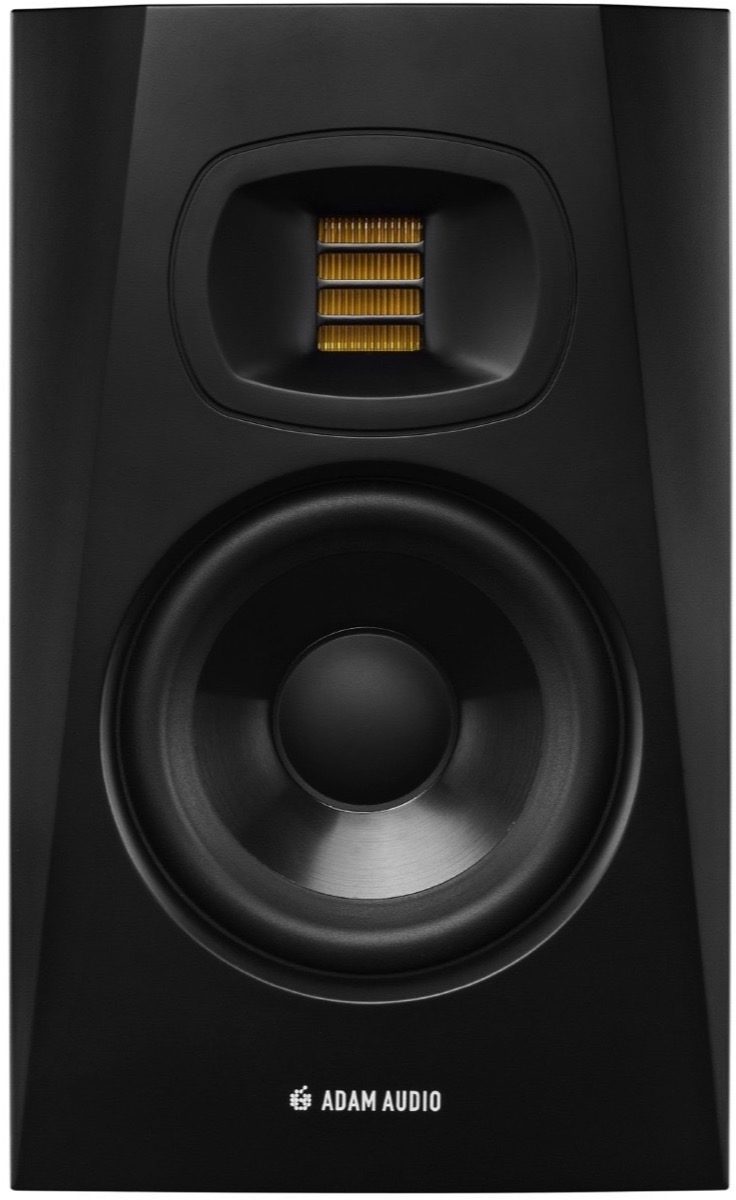
ADAM Audio T5V
The ADAM Audio T5V uses the company’s U-ART high-frequency driver rather than a conventional dome tweeter.
That driver works with ADAM’s HPS waveguide, while the five-inch polypropylene woofer handles the low end in a compact nearfield design.
- 5-inch polypropylene woofer
- U-ART high-frequency driver
- HPS waveguide
- 70 watts total amplification
- 45 Hz to 25 kHz stated frequency response
- High- and low-frequency shelf controls
- Balanced XLR and unbalanced RCA inputs
Best for: songwriters, producers, electronic musicians and home studios looking for a compact monitor with detailed high-frequency reproduction.
See listings on Reverb →
Check the exact model, condition, included accessories, shipping and seller return policy before buying. Listings and availability vary.
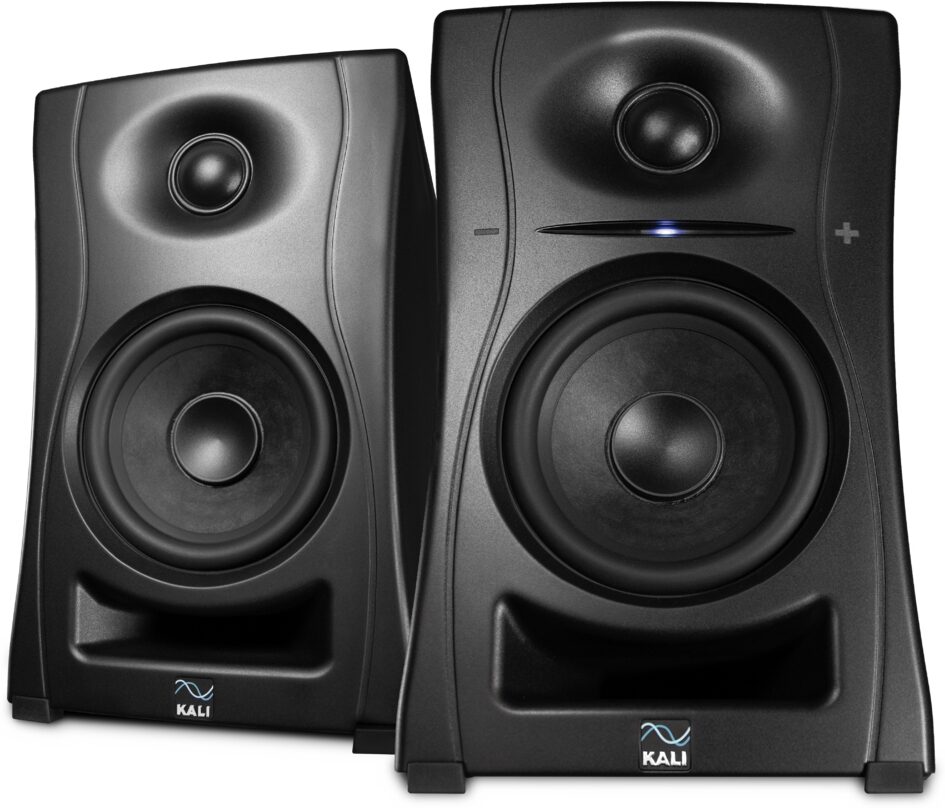
Kali Audio LP-UNF
Kali’s LP-UNF is different from the other monitors here because it is sold as a compact stereo system intended specifically for ultra-nearfield desktop use.
Each speaker uses a 4.5-inch woofer and one-inch dome tweeter, while Kali includes placement settings designed around the reality of placing monitors directly on a desk.
- Powered stereo pair
- 4.5-inch long-excursion woofers
- 1-inch textile-dome tweeters
- 3-D imaging waveguide
- USB-C digital input
- Balanced TRS inputs
- RCA and Bluetooth connectivity
- Boundary EQ settings for multiple desk placements
Best for: bedroom studios, compact desks, apartments, content creators and musicians working at very short listening distances.
See listings on Reverb →
Check the exact model, condition, included accessories, shipping and seller return policy before buying. Listings and availability vary.
HOW BIG SHOULD YOUR MONITORS BE?
4–5 Inch
Compact monitors are usually easier to place at close listening distances and may create fewer low-frequency problems in a small room.
Around 5 Inches
Five-inch nearfields are a common middle ground for bedrooms, offices and project studios where listening distance is relatively short.
Consider Larger
Larger monitors can offer deeper low-frequency extension and more output, but they make more sense when the room and listening distance can support them.
GET THE PLACEMENT RIGHT
Make A Triangle
Start with the two monitors and your listening position forming roughly an equal-sided triangle.
Aim At Your Ears
Position the speakers so the high-frequency drivers are approximately at ear level and aimed toward your listening position.
Watch The Walls
Moving speakers closer to walls and corners can change bass response. Use available room controls, but placement still matters.
Isolate The Speakers
Monitor pads or stands can help reduce vibration transfer into desks and other furniture.
Keep It Symmetrical
Try to keep the left and right speakers in reasonably similar acoustic surroundings whenever possible.
Learn Your Room
Compare your mixes on headphones, cars, earbuds and other speakers. Translation teaches you what your monitoring environment is hiding.
QUESTIONS MUSICIANS ASK
Do I need studio monitors if I already have headphones?
Not immediately, but monitors give you another perspective on balance, stereo imaging and how a mix behaves in a room.
Are studio monitors sold individually or in pairs?
It depends on the model. Many professional monitors are priced individually, while some compact systems are sold as a complete pair. Always check the retailer listing before ordering.
Should I buy 5-inch or 8-inch studio monitors?
For a small home studio, five-inch models are often easier to manage. An eight-inch speaker does not automatically produce more accurate results in a small untreated room.
Do studio monitors need an audio interface?
Most traditional studio monitors are commonly connected to an audio interface or monitor controller. Some compact systems also provide direct USB, Bluetooth or consumer-audio connections.
Do I need a subwoofer?
Not necessarily. A subwoofer can extend low-frequency monitoring, but it also makes room acoustics and placement more important.
Can I use studio monitors for normal music listening?
Absolutely. Just remember that reference monitors are designed primarily to reveal the recording rather than automatically make every recording sound flattering.
HEAR THE MIX.
BUILD THE REST.
Studio monitors are the final part of a larger recording chain. Match them with the right interface, microphones and headphones, or start with our complete home recording guide.
Affiliate Disclosure: Officially Rocks participates in affiliate programs, including the zZounds and Reverb affiliate programs. When you follow certain product links and make a qualifying purchase, Officially Rocks may receive a commission at no additional cost to you. Some studio monitors are sold individually and others as pairs. Product specifications, package contents, availability and pricing can change, so confirm current information with the retailer or manufacturer before purchasing.


