
BEST GUITAR
PEDALS
FOR MUSICIANS
IN 2026
Overdrive, fuzz, delay, multi-effects and the unglamorous pedal every guitarist actually needs. These are five pieces of gear that can genuinely change the way your guitar rig works.
Affiliate disclosure: We may earn a commission from qualifying purchases through retailer links, including Reverb, at no additional cost to you.
FIVE PEDALS WORTH KNOWING
Boss BD-2 Blues Driver
Responsive low-to-medium gain overdrive that can move from subtle breakup into much more aggressive territory.
Electro-Harmonix Big Muff Pi
Thick sustain, massive fuzz and one of the most recognizable guitar effects sounds ever put in a box.
MXR Carbon Copy
Warm analog repeats, simple controls and optional modulation in a compact pedalboard-friendly format.
Line 6 HX Stomp
Hundreds of amp, cabinet and effects models in a box small enough to sit beside conventional pedals.
Boss TU-3
Not exciting. Completely necessary. Tune silently and get back to playing.
Build Slowly
Buy pedals because your music needs them, not because an empty section of pedalboard looks lonely.
Don’t Build Someone Else’s Board
A pedalboard should solve problems for your songs and your rig. The guitarist next to you may need six gain pedals. You may need one drive, one delay and a tuner.
START WITH THE SOUND YOU’RE MISSING
Guitar pedals are dangerously easy to collect.
The smarter approach is to ask what your current rig cannot do. Need breakup at lower volume? Look at overdrive. Need atmosphere? Add delay or reverb. Need an entire backup rig in something that fits in a backpack? Multi-effects suddenly make a lot more sense.
And before any of that, you still need to be in tune.

Boss BD-2 Blues Driver
The Boss BD-2 is built around the feel of an overdriven guitar amplifier rather than an extremely compressed distortion sound.
With Level, Tone and Gain controls, it can move from light breakup into stronger overdrive while still responding to changes in pick attack and guitar volume.
- Overdrive and distortion pedal
- Level, Tone and Gain controls
- Responsive to playing dynamics
- Works for blues, rock and general drive tones
- 9V battery or external power
Best for: guitarists who want one straightforward drive pedal capable of moving from subtle amp-style breakup to stronger distortion.
See listings on Reverb →
Check the exact model, condition, included accessories, shipping and seller return policy before buying. Listings and availability vary.
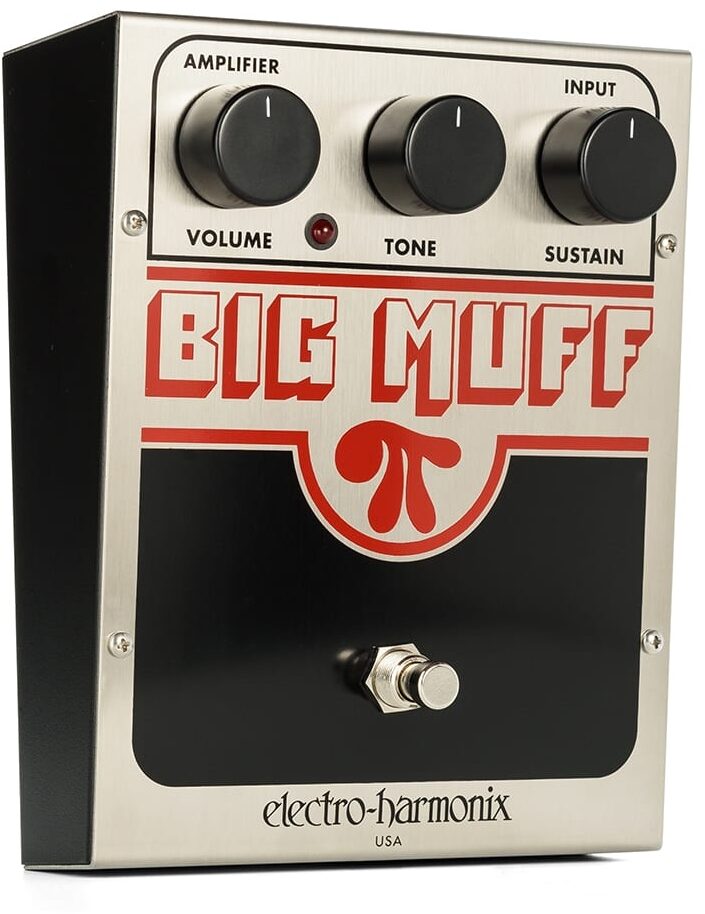
Electro-Harmonix Big Muff Pi
The Big Muff Pi has been part of rock guitar history for decades because it does something very specific extremely well: thick, sustaining harmonic distortion.
Its controls remain wonderfully simple — Volume, Tone and Sustain — while the sound ranges from heavy low-end fuzz to sharper, more cutting distortion.
- Classic analog fuzz / distortion
- Volume control
- Tone control
- Sustain control
- Rugged metal enclosure
Best for: rock, alternative, grunge, shoegaze and guitarists who want a dramatically different sound when they hit one switch.
See listings on Reverb →
Check the exact model, condition, included accessories, shipping and seller return policy before buying. Listings and availability vary.

MXR Carbon Copy
The Carbon Copy is a completely analog delay with three main controls: Regen, Mix and Delay.
Delay time runs from roughly 20 to 600 milliseconds, while a modulation switch can add movement to the repeats.
- All-analog signal path
- Up to 600ms delay
- Regen control
- Mix control
- Delay-time control
- Optional modulation
- True bypass
Best for: players who want warm slapback, atmospheric repeats and classic analog delay without screens or programming.
See listings on Reverb →
Check the exact model, condition, included accessories, shipping and seller return policy before buying. Listings and availability vary.

Line 6 HX Stomp
The HX Stomp sits in a completely different category from a traditional single-effect pedal.
It uses Line 6’s HX modeling platform and includes more than 300 amp, cabinet and effects models, with up to eight processing blocks available at once. It can also act as an audio interface or complete guitar or bass rig.
- 300+ amp, cabinet and effects models
- Up to eight simultaneous processing blocks
- Supports third-party impulse responses
- Stereo effects loop
- USB audio interface functionality
- Compact pedalboard footprint
Best for: gigging musicians, fly rigs, home recording, backup rigs and players who need many sounds without carrying many pedals.
See listings on Reverb →
Check the exact model, condition, included accessories, shipping and seller return policy before buying. Listings and availability vary.

Boss TU-3
The tuner is rarely the pedal musicians get excited about, but it may be the one you use most often onstage.
The TU-3 provides chromatic and guitar/bass modes, a bright 21-segment display, flat-tuning support and automatic signal muting while tuning.
- Chromatic tuner
- Guitar and bass modes
- High-brightness display mode
- Flat tuning support
- Automatically mutes signal while tuning
- Rugged Boss enclosure
Best for: basically every guitarist or bassist who performs live with a pedalboard.
See listings on Reverb →
Check the exact model, condition, included accessories, shipping and seller return policy before buying. Listings and availability vary.
WHERE SHOULD YOU START?
Tuner
Get the boring part right first. A pedal tuner lets you mute silently and tune between songs without unplugging anything.
Gain
Add an overdrive, distortion or fuzz based on the sound your amplifier cannot already produce at the volume you use.
Time Effects
Delay or reverb can add space without completely changing your fundamental guitar tone.
Modulation
Chorus, phaser, flanger and tremolo make sense when your music actually calls for movement and texture.
Power It Properly
Once the board grows, reliable isolated power becomes more useful than running everything from loose batteries and random adapters.
Use One Multi-Effects Unit
A processor such as HX Stomp can replace several traditional pedals or act as the center of a hybrid pedalboard.
QUESTIONS GUITARISTS ASK
What guitar pedal should I buy first?
For live playing, a tuner is one of the smartest first pedals. After that, choose the effect your amplifier and playing style actually need.
What is the difference between overdrive and fuzz?
Overdrive generally aims for amplifier-style breakup, while fuzz creates a more heavily altered and saturated guitar signal.
Do I need individual pedals or multi-effects?
Neither approach is universally better. Individual pedals can make simple rigs intuitive, while multi-effects offer many sounds and routing options in less physical space.
Does pedal order matter?
Yes, but there are no absolute rules. A common starting point is tuner, gain, modulation, delay and reverb, then experiment from there.
Do expensive pedals automatically sound better?
No. Construction, features and rarity can affect price, but the best pedal is the one that produces the sound you need in your rig.
Can pedals be used for recording?
Absolutely. Traditional pedals can be recorded through an amplifier or interface setup, while units such as HX Stomp can also function directly as recording hardware.
FIND YOUR SOUND.
THEN GO USE IT.
Explore more Officially Rocks gear guides for recording, microphones, interfaces, headphones and studio monitoring — or use Gig Finder when you’re ready to take the rig onstage.
Affiliate Disclosure: Officially Rocks participates in affiliate programs, including the zZounds and Reverb affiliate programs. When you follow certain product links and make a qualifying purchase, Officially Rocks may receive a commission at no additional cost to you. Product specifications, availability and pricing can change. Confirm current information with the retailer or manufacturer before purchasing.


