
BEST AUDIO
INTERFACES
FOR MUSICIANS
IN 2026
Your audio interface sits at the center of the modern home studio. It connects your microphones, guitars, keyboards, headphones and monitors to the computer — and choosing the right one can make your entire recording setup easier to use.
Affiliate disclosure: We may earn a commission from qualifying purchases through retailer links, including Reverb, at no additional cost to you.
WHICH INTERFACE SHOULD YOU BUY?
Focusrite Scarlett 2i2 Gen 4
Easy to use, musician-friendly and packed with practical recording tools for singers and instrumentalists.
SSL 2 MKII
Excellent preamps, 32-bit conversion and SSL’s 4K enhancement for musicians who want a little more personality.
Universal Audio Volt 2 Gen 2
Smart metering, tone-shaping preamps, Auto-Gain and a polished modern recording workflow.
MOTU M4
Four analog inputs and outputs, full-color metering and MIDI make the M4 unusually flexible.
PreSonus Quantum ES 2
High-gain MAX-HD preamps, Auto Gain and a Fender-designed instrument input.
Audient iD14 MKII
Quality Audient preamps plus ADAT expansion for a studio that may grow beyond two microphone inputs.
Buy Enough Inputs — Not Ten Years Of Inputs
If you normally record one singer and one instrument, a two-input interface may be all you need. Buy more inputs when your actual sessions require them.
START WITH HOW YOU RECORD
The best audio interface is not necessarily the model with the longest specification list.
A singer-songwriter recording one vocal microphone and one guitar rarely needs eight microphone preamps. On the other hand, a musician who wants to record drums or several band members simultaneously can outgrow a two-input interface almost immediately.
Think about how many sources you need to record at the same time, whether you need MIDI, whether you need extra monitor outputs, and whether you expect the studio to grow.

Focusrite Scarlett 2i2 Gen 4
The Scarlett 2i2 has become one of the default starting points for home recording because it keeps the basic workflow simple while still giving musicians useful modern tools.
The fourth-generation model adds Auto Gain, Clip Safe and Focusrite’s Air mode alongside two microphone preamps and two instrument inputs.
- Two fourth-generation microphone preamps
- Two instrument inputs
- Auto Gain
- Clip Safe
- Air mode
- Loopback
- 24-bit / 192 kHz conversion
Best for: singers, guitarists, songwriters, home studios and musicians who want a straightforward interface that does not create unnecessary complexity.
See listings on Reverb →
Check the exact model, condition, included accessories, shipping and seller return policy before buying. Listings and availability vary.
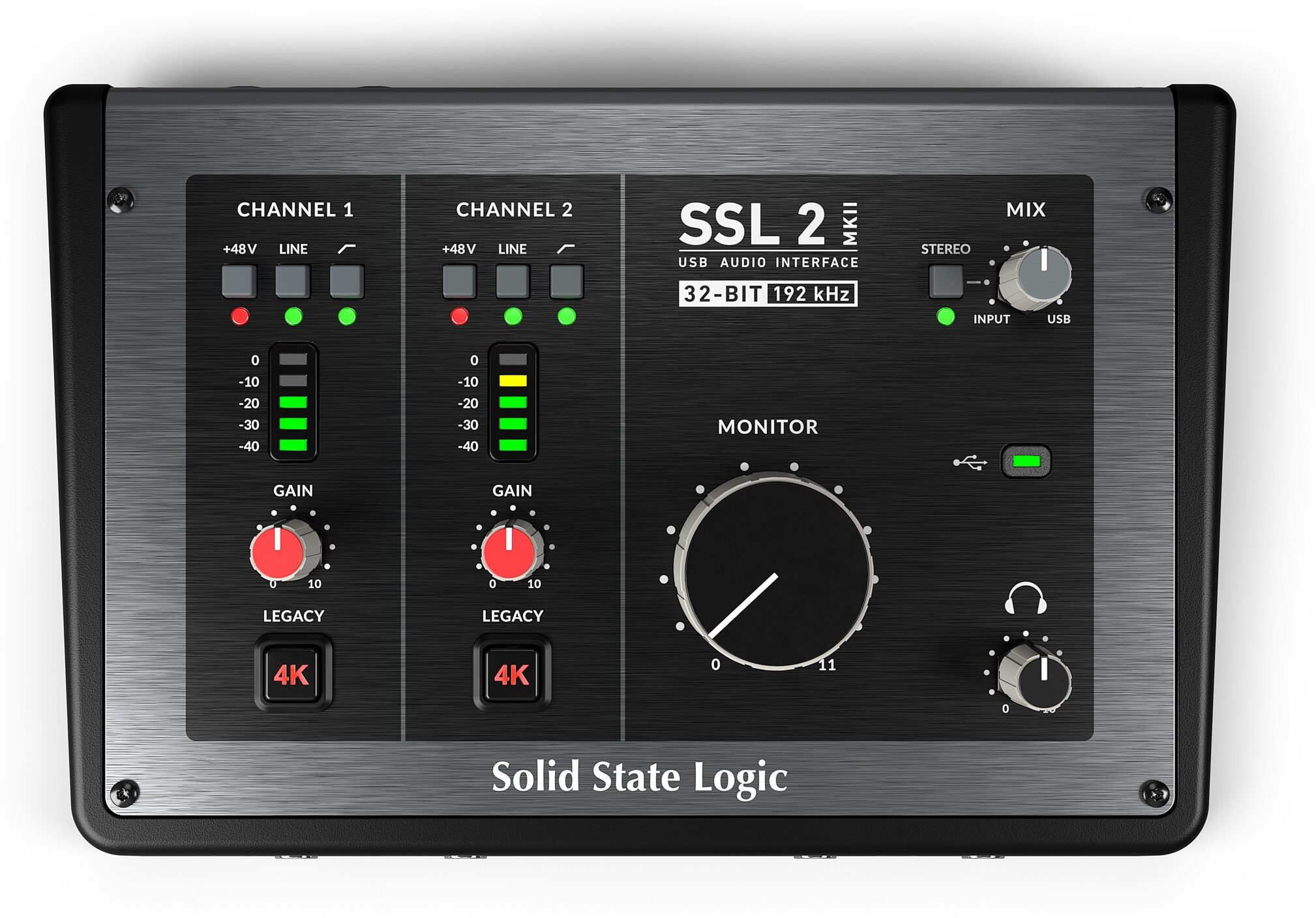
SSL 2 MKII
Solid State Logic built its reputation around large recording consoles, and the SSL 2 MKII brings some of that thinking into a compact two-channel desktop interface.
Each channel has an SSL microphone preamp and the company’s Legacy 4K enhancement circuit, while the MKII generation adds 32-bit / 192 kHz conversion and dual headphone outputs.
- Two SSL-designed microphone preamps
- 32-bit / 192 kHz conversion
- Legacy 4K analog enhancement
- Two instrument inputs
- Two headphone outputs
- Stereo loopback
- Balanced monitor outputs
Best for: musicians, producers and vocalists who want a compact interface with strong preamps and optional analog-style character.
See listings on Reverb →
Check the exact model, condition, included accessories, shipping and seller return policy before buying. Listings and availability vary.

Universal Audio Volt 2 Gen 2
The second-generation Volt 2 pushes the compact interface concept toward a more guided recording workflow.
Its two preamps include multiple tone-shaping modes, while Auto-Gain and Clip Protection help simplify setting levels. A full-color display gives you more visual feedback than the simple LED meters found on many desktop interfaces.
- 2-in / 4-out USB interface
- 32-bit / 192 kHz conversion
- Two tone-shaping microphone preamps
- Warmth, Focus and Shine character modes
- Auto-Gain
- Clip Protection
- Full-color Smart Display
- Built-in loopback
Best for: musicians who like visual feedback, automated gain assistance, flexible preamp character and a modern software-connected workflow.
See listings on Reverb →
Check the exact model, condition, included accessories, shipping and seller return policy before buying. Listings and availability vary.

MOTU M4
The MOTU M4 occupies a useful middle ground between basic two-input desktop interfaces and much larger studio hardware.
It gives you two microphone / instrument inputs plus two additional line inputs, four balanced outputs, MIDI and detailed full-color input and output meters.
- 4-in / 4-out USB audio interface
- Two microphone / line / Hi-Z inputs
- Two additional line inputs
- Four balanced line outputs
- Full-color LCD metering
- MIDI input and output
- Loopback support
- USB bus powered
Best for: keyboard players, electronic musicians, producers and studios that need more analog connections without moving into a large rackmount interface.
See listings on Reverb →
Check the exact model, condition, included accessories, shipping and seller return policy before buying. Listings and availability vary.

PreSonus Quantum ES 2
The Quantum ES 2 is aimed squarely at home-studio musicians and combines two high-gain microphone preamps with a dedicated Fender-designed instrument input.
Auto Gain and clear LED metering help with setup, making this an appealing option for musicians who regularly move between vocals, guitar and other instruments.
- 2×2 USB-C audio interface
- Two MAX-HD microphone preamps
- Up to 75 dB preamp gain
- Fender-designed instrument input
- Auto Gain
- Bright LED metering
- Desktop-friendly design
Best for: guitarists, singer-songwriters and musicians who want a simple two-channel interface with plenty of microphone gain.
See listings on Reverb →
Check the exact model, condition, included accessories, shipping and seller return policy before buying. Listings and availability vary.
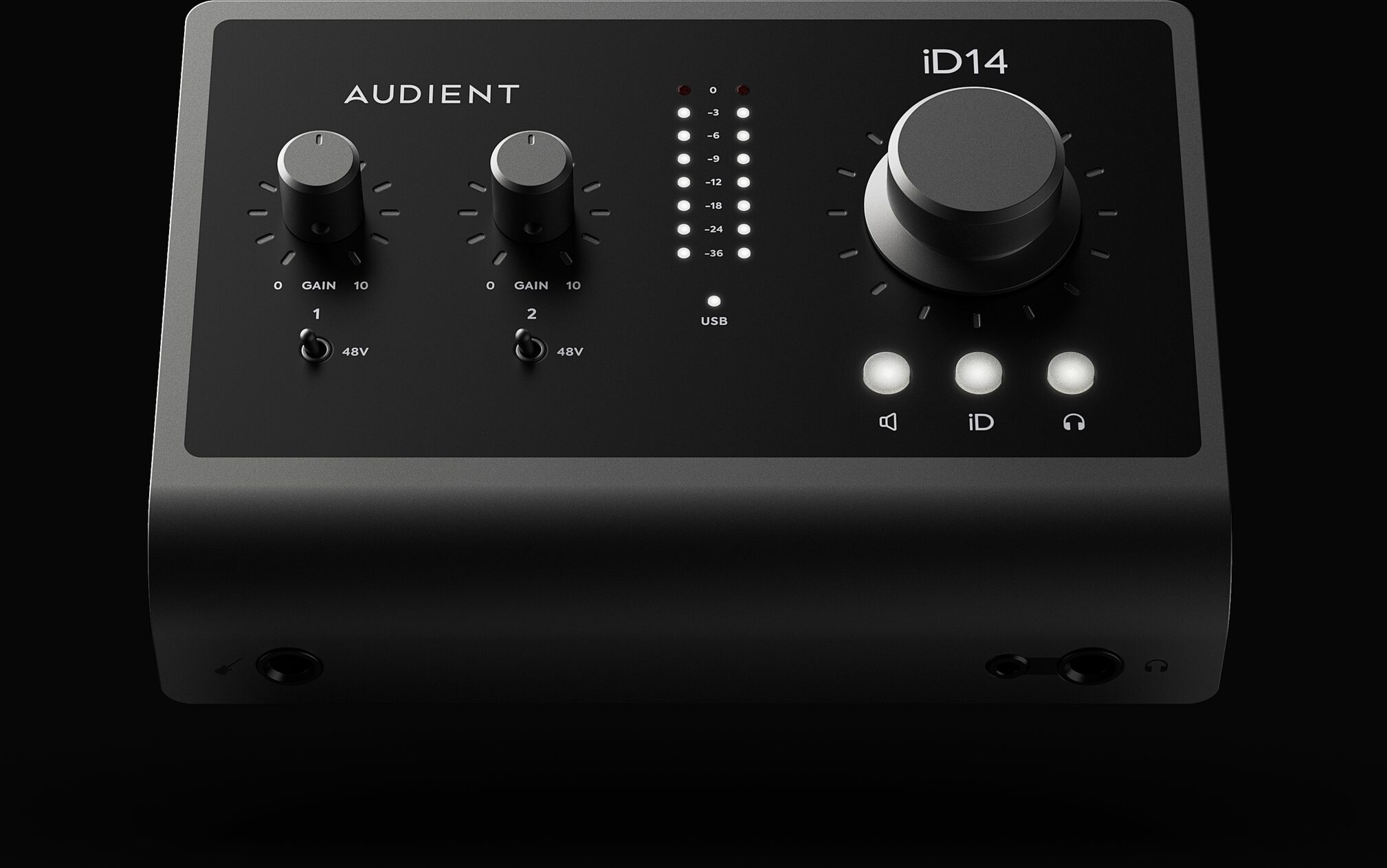
Audient iD14 MKII
The Audient iD14 MKII is especially interesting for musicians who need only a couple of microphone inputs today but do not want their interface to become a dead end.
It includes two Audient console-style microphone preamps and an optical input that supports ADAT expansion, allowing additional microphone preamps to be added later.
- Two Audient Console microphone preamps
- JFET instrument input
- Four line outputs
- Dual headphone connections
- ADAT optical expansion
- Audio loopback
- USB bus powered
- All-metal construction
Best for: home studios that want high-quality desktop recording now with the option to expand into larger sessions later.
See listings on Reverb →
Check the exact model, condition, included accessories, shipping and seller return policy before buying. Listings and availability vary.
HOW MANY INPUTS DO YOU NEED?
1–2 Inputs
Great for vocals, guitar, bass, keyboards and overdub-based home recording. This is enough for a huge number of musicians.
4 Inputs
Useful when keyboards, drum machines, stereo instruments or several external devices need to stay connected at the same time.
8+ Inputs
Recording full drum kits or several musicians simultaneously usually means moving to a larger interface or adding preamps through ADAT.
WHAT SHOULD YOU LOOK FOR?
Microphone Preamps
The preamps provide gain for microphones. Clean gain becomes especially important with lower-output dynamic microphones.
Instrument Inputs
Guitarists and bass players should look for proper Hi-Z instrument inputs rather than assuming every quarter-inch jack is equivalent.
Phantom Power
XLR condenser microphones normally need 48V phantom power from the interface or another microphone preamp.
Direct Monitoring
Direct monitoring lets performers hear incoming audio without waiting for the signal to travel through the computer.
Loopback
Loopback can route computer audio back into recording or streaming software and is useful for content creation and sampling.
Expansion
Optical ADAT connectivity can let a compact interface grow by adding external microphone preamps later.
QUESTIONS MUSICIANS ASK
What does an audio interface actually do?
It converts microphone and instrument signals into digital audio your computer can record, then converts computer audio back into analog sound for headphones and speakers.
Do I need an audio interface to record music?
Not for every possible setup, but an interface is the standard solution when recording XLR microphones, electric instruments or studio-quality analog sources into a computer.
Is a more expensive interface automatically better?
No. More expensive interfaces may add I/O, expansion, conversion, monitoring and workflow features that you may not actually need.
Is two inputs enough for home recording?
For many solo musicians, yes. Two inputs can record a vocal and guitar at once or a stereo source. Larger simultaneous sessions require more inputs.
Can I plug a guitar directly into an interface?
Yes, if the interface provides a proper instrument or Hi-Z input. You can then record the clean guitar signal and use amp-simulation software inside your computer.
What is ADAT expansion?
ADAT is an optical digital connection that can allow compatible interfaces to receive additional channels from an external multi-channel microphone preamp or converter.
THE INTERFACE IS
ONLY THE CENTER.
Pair the right interface with a microphone, headphones and monitoring system that fit the way you work. Our other Officially Rocks gear guides can help you build the rest of the signal chain.
Affiliate Disclosure: Officially Rocks participates in affiliate programs, including the zZounds and Reverb affiliate programs. When you follow certain product links and make a qualifying purchase, Officially Rocks may receive a commission at no additional cost to you. Product specifications, availability and pricing can change. Confirm current product information with the retailer or manufacturer before purchasing.


